How Each Salesforce Migration Phase Shapes the Training Signal Your AI Inherits
Data quality decisions during migration become the foundation your AI models will learn from.
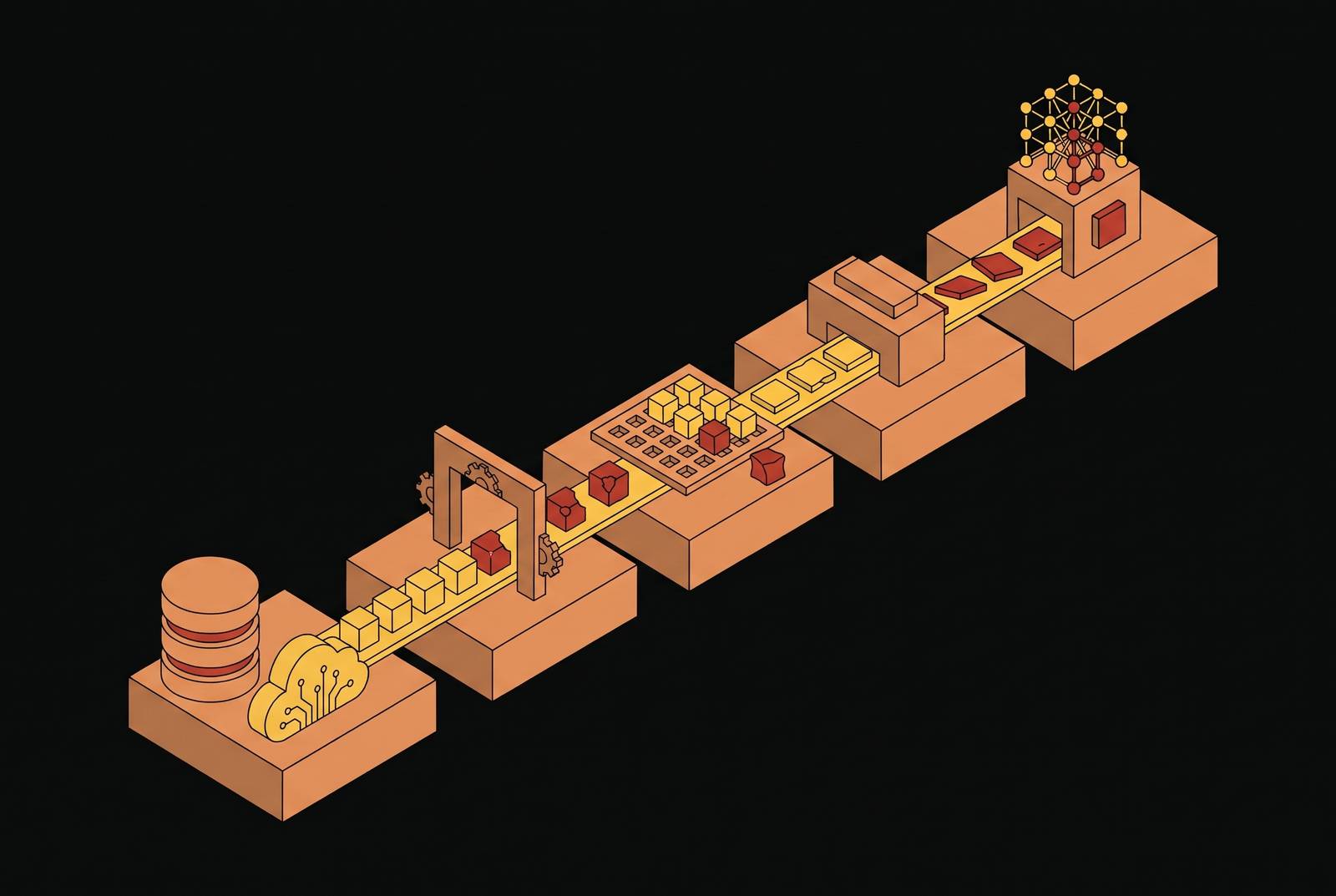
A Salesforce migration shapes more than the records in a new system. It shapes the training signal that AI will inherit, from the history available for learning to the relationships used in predictions. Protecting that signal requires phase-by-phase validation, followed by continuous governance that corrects data quality problems.
Why the decision to migrate Salesforce is also a decision about what your AI will learn
Migration is often managed as an IT project, with success defined by whether records reach the destination. An AI foundation demands a different test. Data must retain the meaning, relationships, and history needed to support training, scoring, forecasting, and action. Salesforce’s State of Data and Analytics report names AI as the top data priority and the biggest stress test for existing data foundations.
IBM’s State of Salesforce 2025–2026 research identifies the central constraint as organizations’ inability to use existing data effectively. Migration can address that constraint or simply relocate it. When teams treat cleansing, relationship validation, and testing as expendable project work, they leave defects in the foundation their models will use. Each migration phase must therefore be examined for the information it preserves, the context it removes, and the corruption it allows into the AI signal.
What the discovery and scoping phase decides before a single record moves
Discovery establishes the boundaries of the AI’s available history. The business objective determines which records belong inside those boundaries, whether the purpose is unified pipeline reporting, legacy decommission, post-merger consolidation, or clean data for an Agentforce rollout. Records archived, purged, or left behind cannot contribute to learning from the migrated CRM. Inclusion also has a cost. Years of junk records, inactive test contacts, and ghost leads introduce patterns that models may treat as evidence of real business activity.
Consolidation from an external CRM presents different volume and mapping complexity from an internal platform upgrade, so a generic definition of essential data is inadequate. Integration dependencies extend that definition beyond Salesforce itself. Marketing automation syncs, ERP connections, and billing systems can introduce late changes when their dependencies emerge only at go-live. Those surprises put the relationships used by downstream AI at risk.
Teams should write down the scope and get sign-off before mapping begins so the boundaries are clear. This establishes a common definition of completion for IT and business teams, reducing divergent assumptions and skipped validations. It also makes exclusions deliberate. Discovery is the cleanest point to remove irrelevant history before it becomes entangled with new engagement data.
How data profiling in the cleansing and mapping phase exposes what the AI would otherwise silently learn
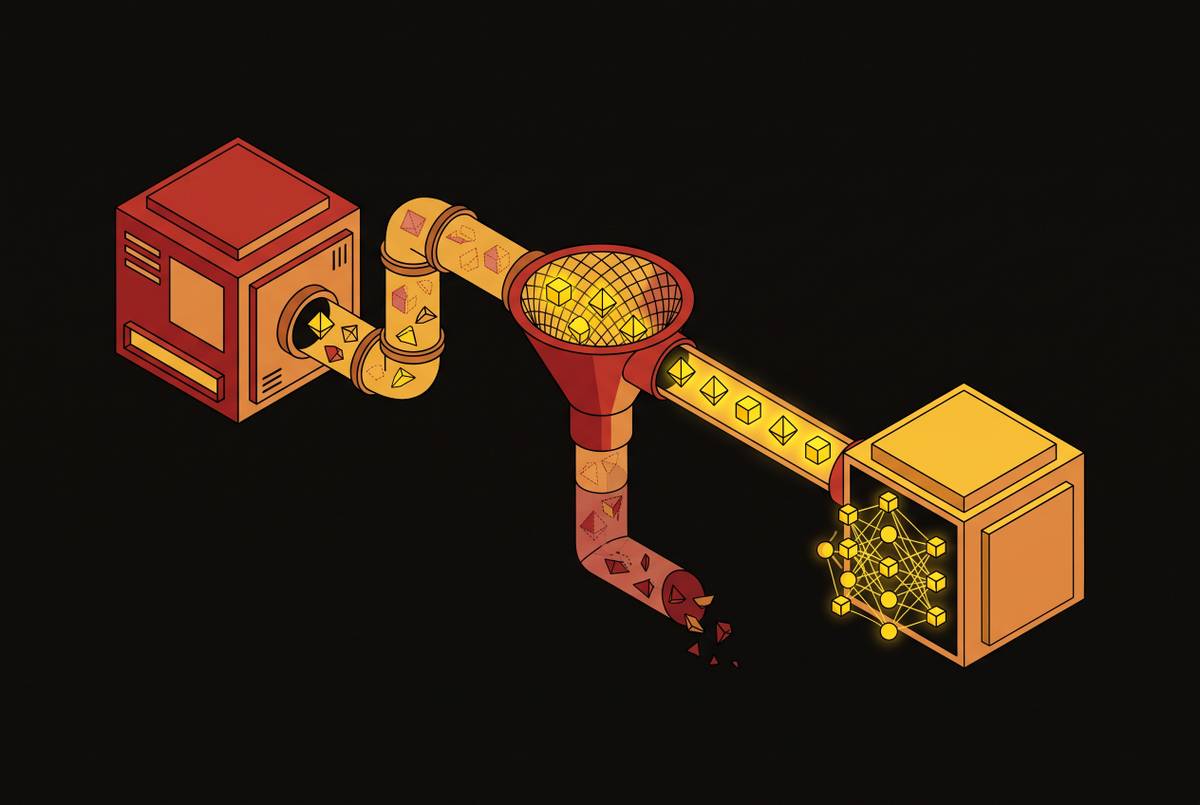
Profiling shows where the source data falls short of what teams assume about it. Missing values, invalid formats, mismatched field types, duplicates, and broken links belong in a remediation log before mapping begins. Without that check, a Contact may load without an AccountId, a phone field may still have letters in it, or an Account may appear under different IDs. These are not interchangeable defects. Each changes a different part of the evidence available to a model.
For example, a duplicate Account can make one revenue stream appear to be two, while an orphaned Opportunity removes the parent Account context needed to interpret pipeline. When a required field is blank, part of the feature set is missing. Cleansing must therefore address both record content and meaning. Its deliverables include every source-to-target field pairing, deduplication on email and company domain, and picklist translations that reconcile values such as “United States” and “USA”. Removing tombstone records and leads inactive for years further limits irrelevant history.
The remediation log and living data dictionary provide traceability. A versioned dictionary keeps track of mappings, transformation rules, and the decisions made for each field, while the log lists the defects found before import. Together, they form the chain of custody for the training signal if an AI output is challenged. Deferring cleanup weakens that chain because new engagement history accumulates around the migrated defects. Work that could take weeks before migration can stretch into months afterward and remain unfinished.
Why the load order and automation decisions in the build and staged load phase determine the AI's relational understanding
Staged loading builds a graph. Users precede Accounts, followed by Contacts, Products and Price Books, Opportunities, Opportunity Line Items, Cases and other objects, and finally Activities. The sequence follows parent-child dependencies. Loading children before their parents resolve can leave orphaned records, depriving models of the relationships needed to interpret them. Activity history is especially sensitive because its links to Contacts and Opportunities provide behavioral context for predictions.
Automations can distort that graph during the load. Validation rules, triggers, flows, assignment rules, email alerts, and duplicate rules can reject records or create unintended states that become part of the historical record. Email alerts may lead historical contacts to unsubscribe in large numbers, while assignment rules may send records to inactive users. Duplicate rules can block legitimate historical records. A downstream model may then encounter an import artifact as though it represented ordinary business behavior.
To protect the staged load, teams should disable those automations before the first records arrive and test a small sample per object before full execution. The sample shows whether mapping logic gives the data the intended structure. Each object wave that follows needs its own quality gate. Its success file should contain zero referential integrity errors before the next dependent object loads, so that an unresolved parent relationship does not propagate through later waves.
What UAT and testing actually validate — and what happens to the AI when teams skip it
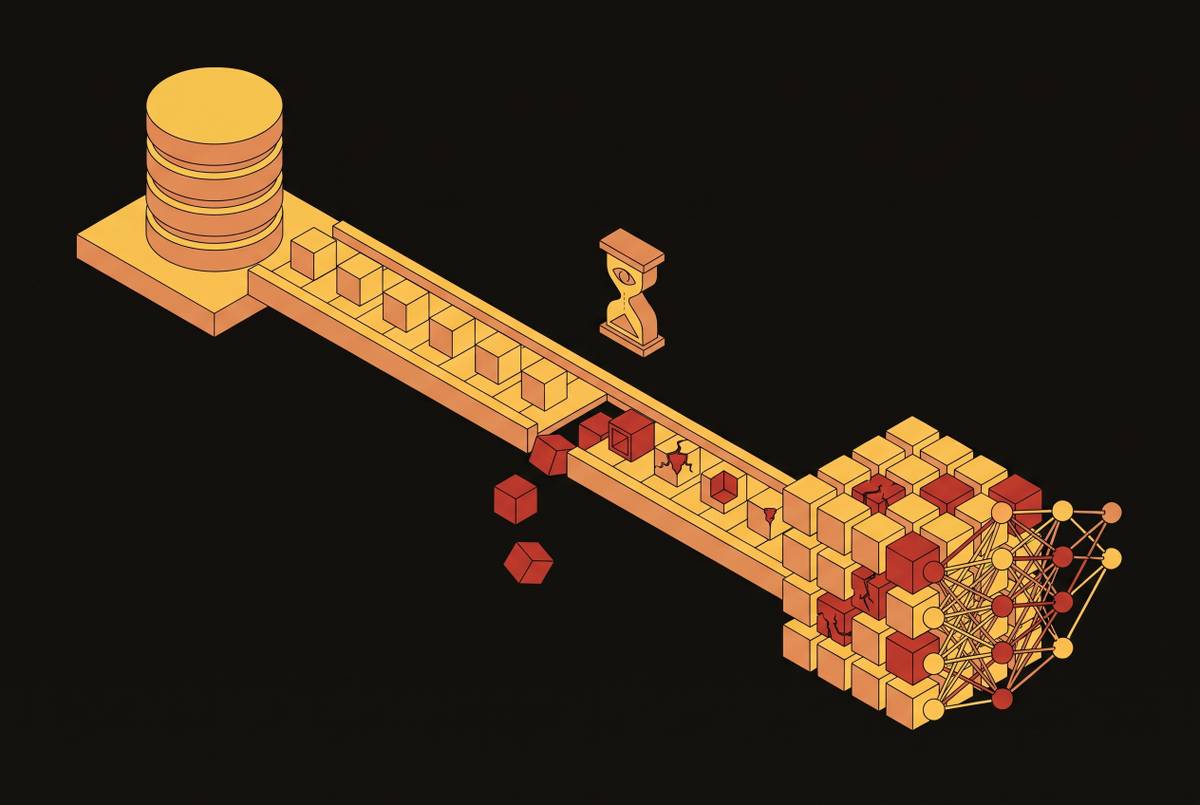
Testing is commonly cut under timeline pressure, precisely when teams need to distinguish successful import from correct operation. User acceptance testing, or UAT, validates more than record presence. It establishes whether migrated data works correctly with automations, workflows, reports, and dashboards. Skipping this phase moves the discovery of defects into production, where the resulting activity may already be entering the history used for training.
An incorrectly firing workflow illustrates the difference. It can create activity records that do not represent real human behavior, leaving the model with misleading behavioral evidence. Mis-mapped Opportunity stages create a separate risk. If they inflate a pipeline report, a model trained on that history can learn an incorrect distribution of stage transitions. These failures arise from how the system interprets records, even when the records themselves exist.
Before go-live, teams should therefore certify reports and dashboards against migrated data and validate accuracy, completeness, and workflow behavior. This is the last pre-production opportunity to catch such corruption. Once live activity accumulates, the defective baseline becomes harder to separate from subsequent events. AI outputs built on that baseline may remain coherent and confident despite being wrong, and polished presentation gives users no reliable way to distinguish the bad prediction from a sound one.
The signal drift that accumulates during cutover and the hypercare window
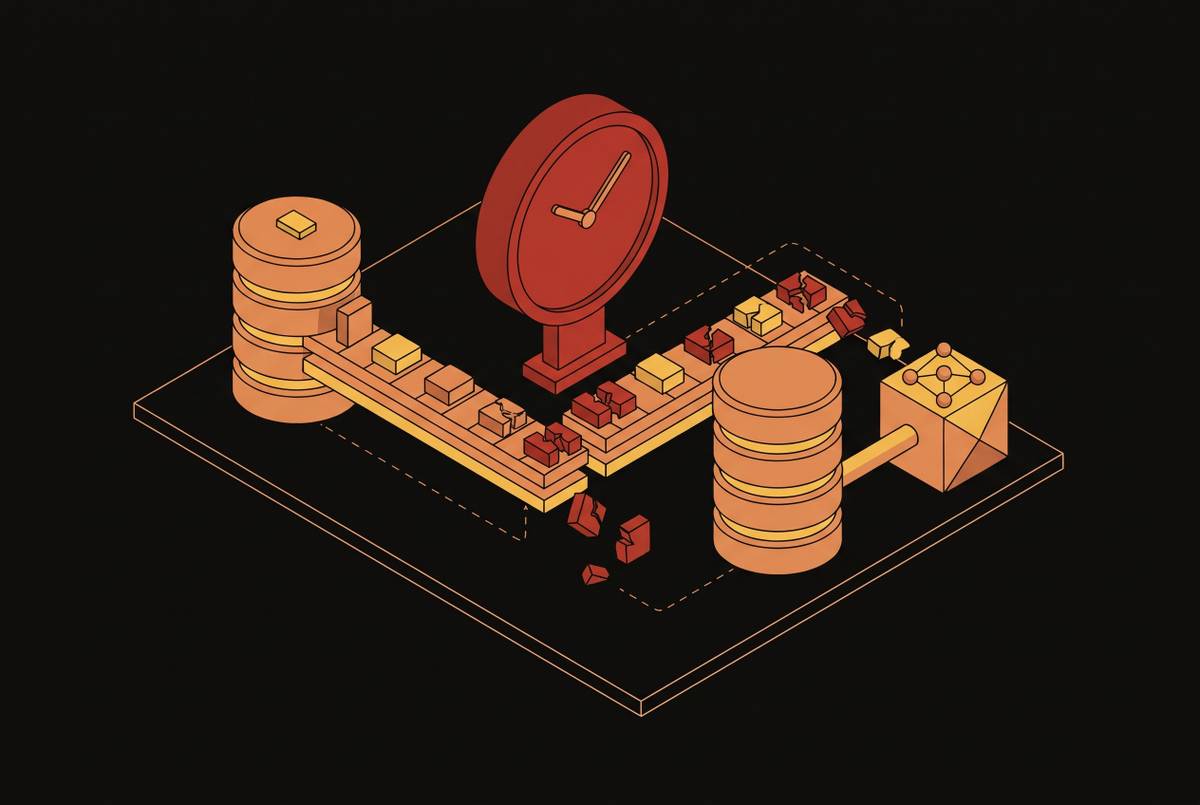
A validated export is still a snapshot. If users continue updating the legacy system during migration, records that were accurate at extraction can be stale when Salesforce goes live. This sync drift has consequences similar to a mapping defect for AI because the destination presents outdated information as the starting state of the business. The earliest live history can therefore be unreliable even after a technically correct load.
Delta migrations using timestamp filters reconcile changes made during the migration window, while a system freeze during final cutover limits further divergence. These controls protect the baseline at the handoff. They do not resolve every problem that live use reveals. In the first weeks, automation rules may fire on records they should leave alone, reports may pull the wrong historical data, and workflows may react to mis-mapped fields. Each can introduce artifacts that later training treats as ground truth.
Hypercare bridges migration validation and ongoing governance. A structured monitoring cadence gives teams a window to identify those artifacts before they accumulate weight in retraining data. Its purpose is to establish whether the validated migration continues to represent the business once live updates and automated actions begin interacting.
How CRM data decays after migration and what that means for every model retrained on live data
Contacts move to new roles, companies merge, phone numbers change, and email addresses stop working. These changes occur outside the migration process. A record can pass every validation at go-live and later become wrong without any technical failure in Salesforce. Unless the records are kept up to date, models retrained on live data learn from a stored history that gets further from how things are now.
Sales reps may skip call logging, leave fields blank, or fail to update stages under time pressure. Missing calls remove behavioral examples, while inconsistent stages distort the sequence of business events. A model retrained quarterly can consequently learn from a progressively less reliable history, despite the quality of the original migration. Retraining refreshes the model’s exposure to data regardless of that data’s accuracy.
Salesforce’s report identifies incomplete, out-of-date, or poor-quality data as the leading barrier to becoming truly data-driven. IBM’s research extends the problem across organizational boundaries, warning that agents remain limited to isolated tasks without a shared source of truth across clouds, platforms, functions, and workflows. Its findings associate successful agent scaling with optimized ROI, prioritized governance, and the use of data beyond Salesforce. Post-migration quality must therefore preserve the shared context on which broader AI action depends.
Why alerting on data quality problems after migration is not enough to protect the AI signal
An alert leaves the affected record in the CRM while a person investigates, prioritizes, and decides what to change. During that interval, the record remains available to downstream models. At enterprise CRM volume and velocity, that dependence on manual triage allows unresolved work to accumulate faster than teams can clear it.
Conventional monitoring is strongest when a known failure triggers a discrete error. Slow degradation is less visible. Stale contacts, missed fields, and inconsistent stage labels can weaken the training distribution without producing a single obvious incident. Even where monitoring detects them, detection alone cannot stop their continued use. IBM’s research identifies poor data availability and quality as the leading barrier to agentic AI adoption, making remediation capacity necessary for deployment.
Alerting assumes that a person can act on every signal that matters, while agentic operation at scale needs routine work on data quality to go ahead without waiting for a person. Human judgment remains necessary for consequential decisions. Every low-risk correction cannot have to wait for that judgment.
What autonomous data reliability looks like as a continuous post-migration governance layer
Continuous governance uses specialized agents to watch for problems, find them, propose fixes, and apply them. It covers the kinds of defects found throughout migration. Newly created records can introduce duplicates, rep activity can leave required information missing, new users can introduce inconsistent picklist values, and personnel changes can make contact data stale. The work does not end with detection. The governance layer must fix routine defects before they keep making their way into retraining data.
Evidence-based fix proposals preserve a role for human judgment. Each proposal presents the recommended change with the agent’s reasoning, allowing reviewers to audit selectively rather than investigate every issue from the beginning. Autonomous application is appropriate where confidence is high and the change is low-risk. Consequential decisions remain subject to human review.
The earlier migration phases supply the recurring checkpoints. Profiling failures, mapping inconsistencies, referential integrity breaks, and UAT-class errors can all reappear in live data, even after their original migration instances were resolved. Autonomous governance must detect their live equivalents and connect them to evidence-backed correction. This keeps the migration’s quality controls in day-to-day use, with teams continuing to use the documents and tests after go-live. The AI then inherits a maintained signal.