Salesforce Org Consolidation Approaches for Enterprise Teams
Consolidation strategy depends on resolving conflicting data and business rules first.
Enterprise teams should choose Salesforce org consolidation approaches based on CRM data quality for M&A integration as well as how records will move. Whether the answer is a full merge, a new org, or governed separation depends on resolving customer identity, conflicting business rules, and integration dependencies. Deduplication starts by deciding which record or data service is authoritative for each shared entity, before records move.
Why enterprises end up with multiple Salesforce orgs and why that liability compounds over time
Multi-org estates emerge from acquisitions, regional expansion, and departmental autonomy. They are not necessarily evidence of poor planning. Each org preserves years of local decisions in its objects, fields, automations, security controls, and integrations. An acquisition brings all those decisions into the enterprise at once, while leaders expect a unified customer view that the combined architecture cannot yet give them. Regional and departmental growth create the same divergence more gradually.
Duplicated capability is the stronger diagnostic. When teams maintain the same record type, business rule, permission model, integration, and report twice, the estate functions as duplicated infrastructure. Admins test similar changes in several sandboxes, integration teams maintain mappings between competing definitions, and incident investigations take longer. Duplicate enrichment spend adds another cost without creating a shared authority.
Those costs occur when answering a business question requires data from more than one org. Finance needs to see pipeline by parent company, but sales teams use different customer hierarchies. Service agents search several systems while sellers ask operations teams to make the account views agree. Teams therefore have to work out what the data means before they can answer each request.
What the data fragmentation actually costs in revenue and operational terms
Fragmented CRM data hurts revenue when deals are lost, selling time is wasted, and forecasts are hard to trust. These are operating losses. A seller working from an incomplete customer view lacks the context held elsewhere, while operations teams spend time assembling information that should already agree. Forecasts built from competing customer and lifecycle definitions inherit those inconsistencies.
As data decays, the work keeps building up. B2B contact data degrades continuously, so an org can become unreliable even if its records were clean at go-live. In a multi-org estate, the same record diverges independently in several places. Without a trusted authority, teams reconcile those differences manually or leave them unresolved. Either way, teams lack a steady basis for decisions about revenue.
Trust also changes how people use the system. When employees stop believing that CRM records reflect reality, reporting can become an exercise in supplying what leaders expect to see. The forecast then reflects those entries and gives an unreliable account of the business. AI extends the exposure beyond human reporting. An agent acting on the wrong record can repeat the error at machine speed, turning a data defect into an operational failure at scale.
AI readiness as the new forcing function behind consolidation decisions
Agentic AI makes data quality a direct constraint on execution. Human representatives can sometimes recognize an implausible record and work around it. Agents cannot be relied on to make that accommodation. Decisions about consolidation are more urgent in 2026 partly because CRM data is moving from use in reports to use in automated action.
Agentforce depends on the quality of the data available to it. Records with gaps or data that disagrees can cause agents to route cases the wrong way, misclassify leads, give wrong information, or fail to resolve interactions they should handle. These are failures in the system of record expressed through an agent. Adding AI does not settle disagreements about customer identity, ownership, or lifecycle state.
That dependency changes how consolidation options should be evaluated. A unified interface is insufficient if the underlying records still disagree, and a single org offers little protection if conflicting definitions survive inside it. Conversely, separate orgs can support a coherent customer view when their shared identities and ownership rules are governed. The architecture must resolve the enterprise’s data conflicts and keep them resolved. The available approaches make different demands on that capacity.
The three consolidation approaches and what each one actually requires
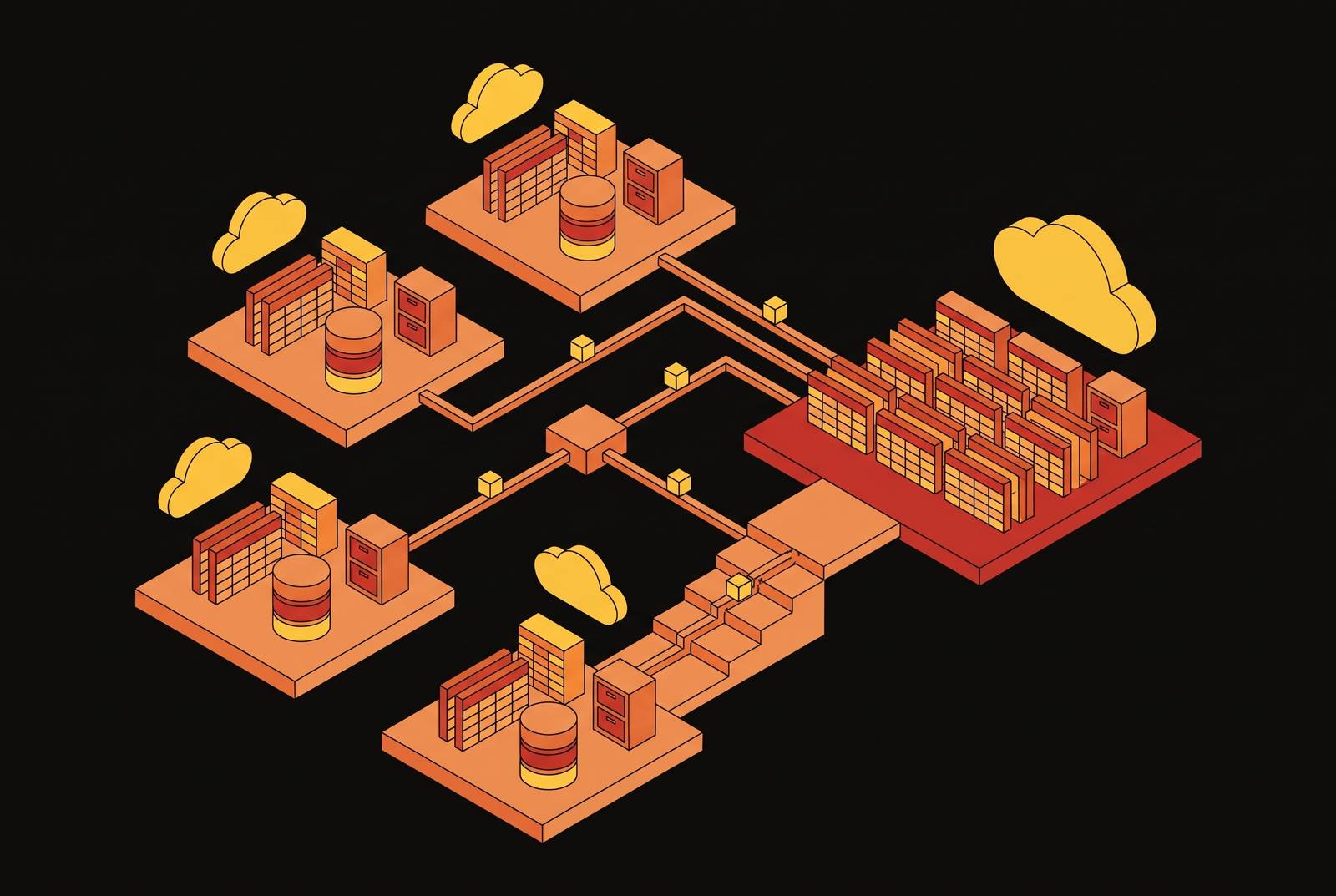
A full merge brings the estate into a surviving org. It requires an authoritative record or data service for every shared entity type, including accounts, contacts, households, and external IDs. Teams must also decide which automations, permission models, and integration endpoints survive. A canonical data model comes first. Significant customer overlap, a need for one pipeline and forecast, and compatible compliance requirements favor this approach, particularly when one org is reasonably clean.
Greenfield consolidation moves both legacy orgs into a new org built around how the combined company plans to work. It fits situations where both orgs are heavily customized and neither provides a sound target. There is no legacy winner. However, this approach demands the most upfront design work because object definitions, business rules, and the future-state data model must be agreed before migration. Otherwise, the new org simply inherits the old disagreements.
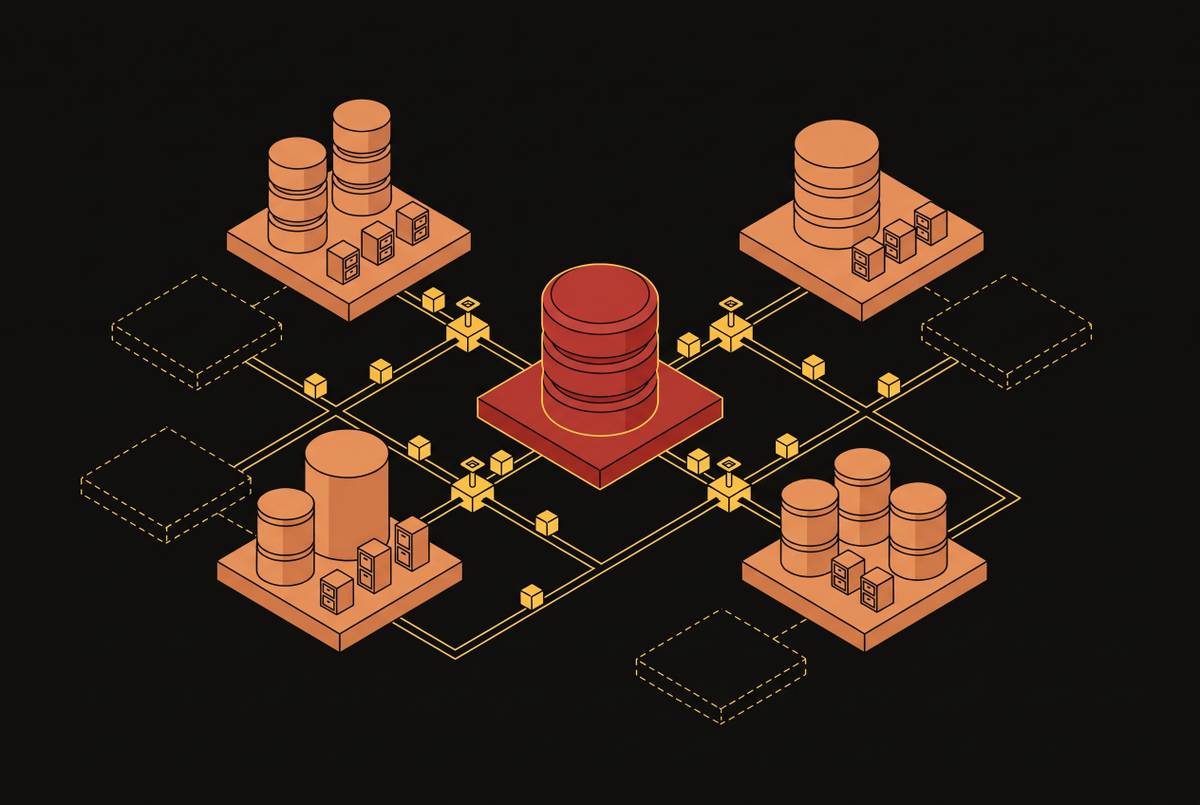
Governed multi-org keeps transactional environments separate, with reporting, integration, and governance shared across them. Regulatory separation, data residency, distinct legal entities, and genuinely different operating models can justify it. Minimal customer overlap and unit-level autonomy also reduce the urgency of a full merge. Separation still needs shared customer identity, synchronized master data, and explicit ownership for records crossing org boundaries. The choice rests on process compatibility and separation requirements.
How do enterprise teams deduplicate customer records when merging two CRMs after an acquisition?
Deduplication fails when teams treat identity conflicts as something they can fix by moving records. The same account or contact may have different IDs, parent relationships, and external IDs in each org. Moving both records does not establish which one is authoritative. Before a merge, the business must decide which record or data service governs that entity and how the target model represents it. Otherwise, teams have to clean up after migration.
Identity is only one source of conflict. Flows, Apex, assignment rules, and approval processes may handle the same event differently because each org encodes a different local process. Combining them without resolution creates unpredictable behavior. Permission sets, profiles, and sharing rules can likewise embody incompatible views of who should see or change data. These decisions set the standards for the enterprise as well as the technical configuration.
Integration dependencies make the sequence consequential. Connected apps and endpoints depend on the models and rules being reconciled, so a clean target is useful only when ownership and surviving processes are clear. The practical sequence begins with org inventory and process comparison, followed by data profiling and integration mapping. Target architecture definition and security review then establish the conditions for moving records. Treating migration as the primary workstream often leaves teams with more cleanup than planned reconciliation would have required.
What a phased consolidation playbook actually looks like in practice
Execution requires separate phases for assessment, architectural decisions, reconciliation, migration, and ongoing governance. Assessment should inventory each org’s objects, fields, record types, flows, Apex classes, permission sets, connected apps, and managed packages. It should also profile data volumes and quality, map integration endpoints, and identify regulatory or residency constraints. This establishes the actual scope. Comparing processes then shows where things that seem to work the same way follow different rules.
Teams should use the merge-versus-multi-org criteria to make their choice before records move. Teams need to define the target architecture and explain which org, if any, will survive. Reconciliation then settles customer identity, canonical definitions, duplicate records, automation conflicts, and access rules. This is the central work. Migration cannot compensate for decisions left unresolved here, because validation needs an agreed model against which to judge the result.
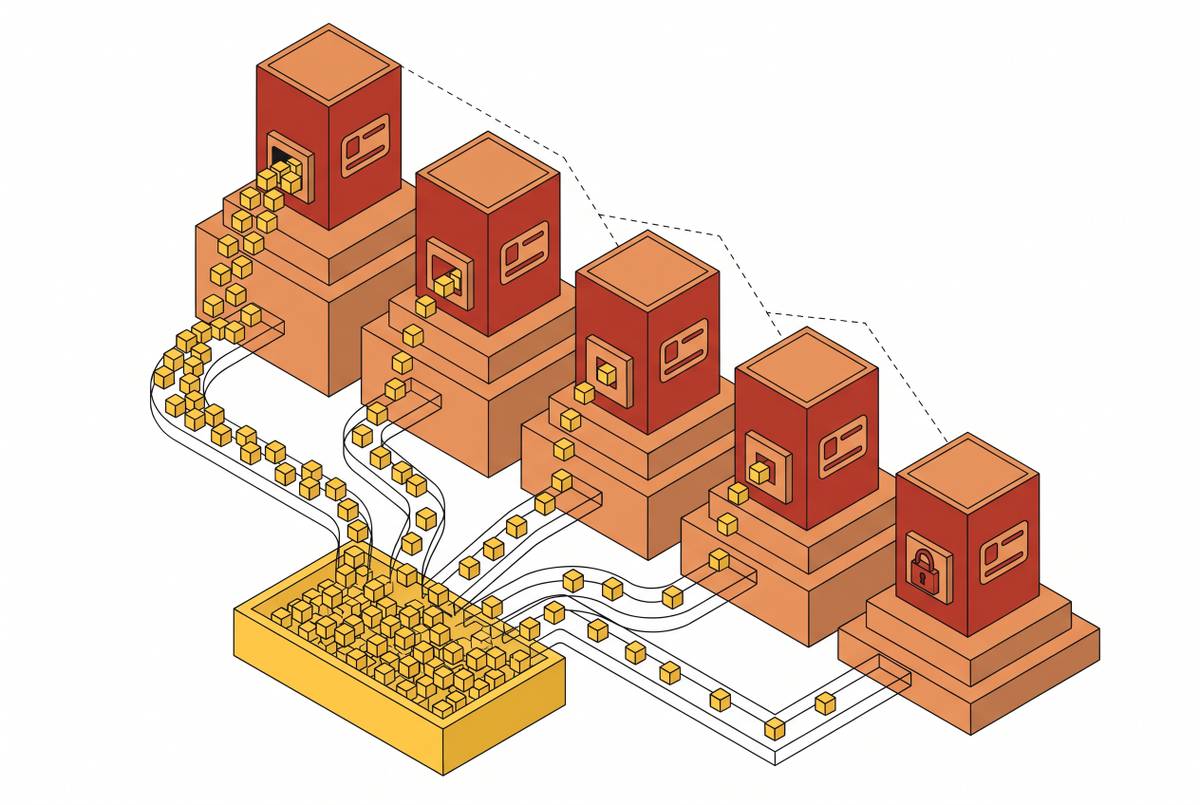
Migration should move data and users in waves, with each wave validated against that model. During transition, the source org should remain readable but not writable so that new changes do not recreate divergence. Before the project closes, governance needs to establish post-cutover ownership, data quality standards, and live monitoring as part of the playbook. Without them, fragmentation can recur within quarters.
What the governing architecture of the consolidated org must include
A consolidated org needs ownership rules that spell out which definitions the whole enterprise shares and which local differences are allowed. Those rules must govern changes as well as existing records, or the target will drift toward the fragmentation it replaced. Data quality monitoring is an operating requirement. For agentic systems, monitoring must also extend to agent behavior, because tools designed for static Apex triggers or workflow rules do not adequately cover probabilistic execution.
The Einstein Trust Layer has sensitive-information masking, zero-data retention with third-party AI providers, and audit trails of agent interactions. Its classification boundary needs explicit attention. Salesforce’s documentation distinguishes automatic pattern-based detection in prompt text from field-based masking, which requires pre-existing Shield Platform Encryption or data classification tags. Common patterns such as names and credit card numbers can be detected automatically. Non-standard identifiers, including medical record numbers, policy numbers, and financial identifiers outside the default pattern set, require classification to avoid a masking gap.
Salesforce Help states that first-party instance consolidations involve advance notifications and downtime during a site-switch. Sandbox refreshes stop shortly before the switch, and in-progress refreshes restart from the beginning afterward. Org IDs remain unchanged, although IP allowlists and custom DNS timeouts may need updates. Hyperforce orgs are not affected by these instance consolidations.
The case for keeping multiple orgs and what that decision actually requires
A governed multi-org strategy can be the correct long-term architecture. Regulatory separation, data residency, independent legal entities, distinct operating models, and serial acquisition cadences can justify separate transactional environments. Operational separation can coexist with a common data layer for customer identity and analytics. A unified customer view does not require every process to run in the same org.
Context provides a substantive argument against indiscriminate merging. Pipeline numbers can be correct yet give the wrong impression when orgs have different seasonal patterns or deal stage definitions. AI does not resolve that ambiguity merely by accessing the records. Data model documentation and agent configuration must explain the context in which those figures are meaningful. Necessary distinctions must be preserved and documented while shared definitions are settled.
Keeping multiple orgs therefore requires more rigorous cross-boundary data management. Teams still need the same classification, enrichment sequencing, and quality monitoring they would use in a merged org. Shared customer identity adds another obligation. Ownership rules and synchronized master data must prevent each environment from drifting back into its own account of the customer. Multi-org is defensible when separation serves the business, but it is not a low-effort substitute for reconciliation.
Why continuous data quality monitoring is the prerequisite the consolidation project cannot defer
Consolidation establishes data quality at a point in time. Contact decay, changing records, and fragmented go-to-market workflows continue to put that condition under pressure. When sales, marketing, and revenue operations use processes that are cut off from each other, data that disagrees is a sign of how the workflow itself works. Monitoring must therefore be embedded in those workflows rather than added as a separate reporting layer after cutover.
At enterprise record volumes, a system that flags defects and waits for human triage can generate a backlog faster than teams can clear it. An alert is not remediation. The architecture described by this requirement is agentic, continuously detecting duplicates, missing fields, and inconsistencies, proposing evidence-based fixes, and applying them without waiting for a person to triage every alert. Its value depends on maintaining quality in the system of record.
Revenue and go-to-market teams can report a Data Integrity Score to the CRO alongside pipeline metrics, making data quality visible as a revenue-critical asset. That connects the consolidation investment to the decisions and actions it supports. Whether the enterprise merges, rebuilds, or federates, continuous reconciliation is the condition that makes its chosen architecture durable.