CRM Platforms Ranked by Training Data Exportability
Enterprise CRMs offer deeper governance; AI natives capture cleaner data and stronger live access.
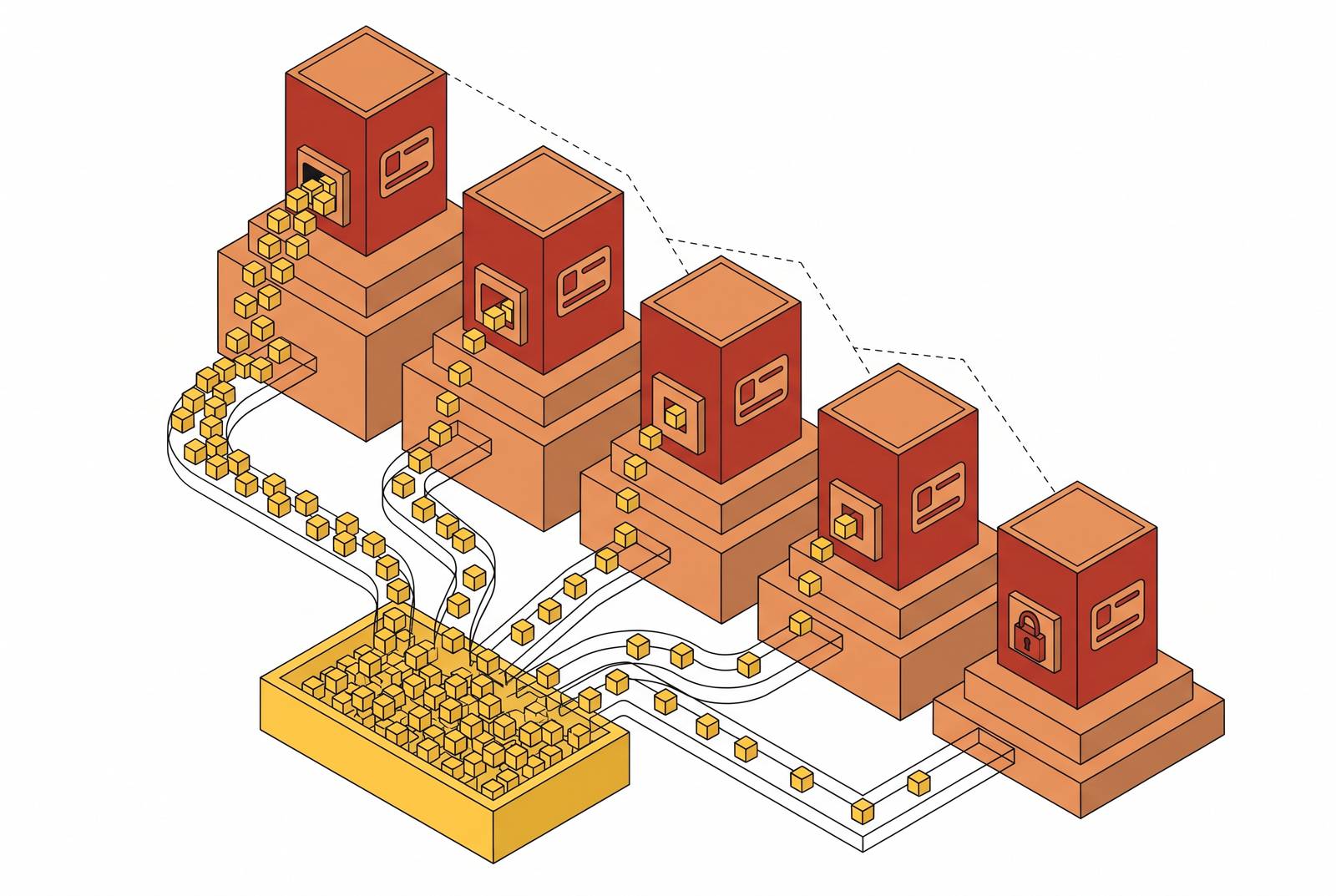
Ranking CRM platforms by training data exportability reveals more than how easily records leave a system. It exposes whether the platform structures, maintains, and governs data well enough for AI use. Enterprise CRMs have deeper governance, while AI-native challengers capture cleaner data and offer stronger live access. Neither advantage establishes AI readiness without continuous data quality assurance.
Why exportability is the right lens for judging CRM data quality
An “AI-powered” CRM can offer sophisticated features while leaving the data beneath them difficult to extract or operationalize. That gap becomes visible when records must support a training pipeline or an external AI agent. Exportability tests whether data can be reached, used, and trusted outside the workflows the platform controls.
This is a broader test than portability. A bulk download establishes that records can leave, but not that their structure supports useful training. Live access establishes that an agent can reach records, but not that those records support sound decisions. Judging exportability therefore means examining access together with the condition and governance of the data exposed.
Agentic AI makes that distinction operationally significant. Agents that qualify leads, update records, and route deals without human sign-off can repeat errors in their inputs and build on them at machine speed. When data is hard to export, its flaws can stay hidden until those actions bring them to light. Testing access and trust shifts the focus from features, integrations, and price to how a system must be built to support AI-driven operations.
What makes CRM data unreliable before it ever reaches an AI system
A majority of CRM data is unreliable at the point of use, so an AI system can inherit defects before it makes its first decision. The problem begins inside the system of record. Manual entry, absent automated capture from email and calendar, duplicates, missing fields, and fragmented martech data are structural weaknesses in how most established CRMs were designed. An export mechanism takes the records as they are, without fixing the flaws in how they were created.
B2B contact data loses accuracy every month. Even a previously accurate database degrades without maintenance. Completeness at one moment does not establish continuing reliability. A training snapshot may keep old information, while live access may serve it up again and again.
The governance gap extends beyond individual records. Only a small fraction of organizations say they trust their data enough for accurate reporting, largely because of inconsistencies across systems. Those inconsistencies reveal that access to information and agreement about its meaning are different achievements. For AI, the consequence reaches beyond a wrong report, because unreliable inputs can train models incorrectly and compound errors across subsequent automated decisions.
The two mechanisms that now define CRM exportability: bulk export and MCP
Bulk export provides full data extraction through an API or file download. It remains the traditional route for AI training because it gives teams a snapshot they can clean, label, and feed to a model. The output is a corpus. Its value depends on whether the extracted data is structurally usable and whether its defects can be identified before training.
The Model Context Protocol, or MCP, serves a different purpose. It lets external AI clients, including Claude and ChatGPT, query and update CRM records through a server that mediates between the model and the system of record. This separation gives the LLM mediated database access independently of a full export, making the architecture more defensible for regulated environments while leaving compliance to be established separately.
The two paths test distinct architectural strengths. Bulk extraction supports proprietary model fine-tuning, for which a training corpus is needed, while MCP supports agents working with current records. Strong bulk export without MCP creates friction for agentic workflows. Conversely, MCP with weak data hygiene accelerates access without improving the inputs.
Both paths need governance, with controls that fit how the data is used. Teams need to ask whether CRM data trains external models, whether sensitive fields can be masked, and whether every AI action is logged. Neither mechanism answers those questions by its presence alone. A genuinely AI-ready platform needs useful extraction and live access under controls appropriate to each.
How established enterprise CRMs perform on exportability: Salesforce, Microsoft Dynamics 365, SAP, Oracle, and HubSpot
The established enterprise platforms form a tier with deep export infrastructure and broad AI investment. Their advantage comes with architectural complexity. Governance layers can protect data but also make it harder to access, while deeper integration often makes access easier within the vendor’s own environment. Each platform’s strengths therefore have a boundary rather than translating into unrestricted exportability.
Salesforce shows how what AI can do differs from how data can be moved. Agentforce, introduced in 2024 and adopted across thousands of organizations, deploys autonomous agents including Engagement Agent (Lead Nurture), Sales Coach Agent, Pipeline Management Agent, and Prospecting Agent. These agents operate without waiting for human prompts. Data Cloud lets those agents act through federated access without data duplication, so data does not need to be copied or replicated first.
Salesforce also provides an explicit governance layer. The Einstein Trust Layer has data masking, zero-retention arrangements with model providers, and toxicity checks. Those controls address risks that raw extraction alone leaves unresolved. Federated activation and governed AI access are substantial strengths, but neither should be confused with a simple, unrestricted training-data export path.
Microsoft Dynamics 365 has a different advantage for organizations already using Microsoft 365. Its integration depth creates a low-friction path into the broader Microsoft data estate. That benefit depends on the installed base. It is strongest where the surrounding environment already supports the movement and use of CRM data.
SAP Sales Cloud and Oracle Fusion Cloud CX have similar limits on access outside their ecosystems. SAP’s Joule automates administrative tasks and draws real-time insights from connected systems including S/4HANA. Its exportability is strongest within the SAP ecosystem and narrows outside it. Oracle offers enterprise-scale infrastructure for large, complex organizations, with high exportability within its own data estate but a similar dependence on that ecosystem.
HubSpot combines bulk export with MCP support and a presence in the ChatGPT connector directory. Its Breeze Marketplace, now Agent Hub, hosts pre-built agents and apps, while the separate core Customer Agent can use account content including the knowledge base, website, CRM records, and conversation history. Live access is therefore a concrete strength. However, Breeze’s broader depth is concentrated in higher-tier plans, limiting the infrastructure available to teams on lower plans even though the remote MCP server is available to all accounts.
How AI-native challengers perform on exportability: Attio, Breakcold, Clarify, Close, and folk
The AI-native challengers present a different exportability profile, combining automated capture with stronger emphasis on live AI access. Their architecture reduces reliance on manual entry. That can improve data before it reaches an export interface, rather than leaving every correction to a downstream training pipeline. Their shorter track records in bulk export governance and audit depth remain a separate constraint.
Attio offers a hosted MCP server through which Claude, ChatGPT, and other AI assistants can search records, log notes, and manage tasks. These operations do not require a full export. Automated capture from email, calendar, and other channels also gives its access layer a cleaner starting point than manual entry alone. Its limitation is less proven governance and audit-trail depth for regulated enterprises that need to trust bulk training exports.
Breakcold combines a first-party MCP server with multi-channel capture. It treats email, LinkedIn, WhatsApp, Telegram, calls, and meetings as first-class channels, automatically syncing conversations into deal records. Its AI can move leads automatically and handle deduplication. Together, synchronization and deduplication make agents less likely to find the duplicate and inconsistent records that come with manually entered data.
Breakcold’s server exposes CRM data to a wide range of external AI clients, placing it among the broadest live-access offerings in this tier. That access advantage leaves complete governance to be established separately. The distinction prevents a strong MCP implementation from standing in for evidence about every requirement of an enterprise training pipeline.
Clarify, Close, and folk share the automatic capture approach, collecting contact and company data from email and calendar. This supports cleaner, more complete data at the source. The details available do not show that they have the same MCP capabilities. Connectivity varies across the three, so their capture architecture supports a firmer conclusion than any specific comparison of their live-access tools.
Why exportability without data quality assurance is a false signal of AI readiness
Easy export becomes a false signal when it is treated as evidence that the underlying records are reliable. A CRM that is poorly maintained can pass on bad inputs quickly. In agentic workflows, that speed can be worse than slower access to clean data because it accelerates the compounding of errors. Exportability remains necessary, but it becomes a useful proxy for quality only when reliability is maintained continuously.
The strongest objection to maximizing access concerns governance. Agents may act on unverified records, sensitive fields may enter training datasets, and automated decisions may lack an audit trail. These risks require access to be evaluated together with the controls that constrain its use.
Forrester’s 2026 predictions warn that untested generative AI functionality combined with lagging user skills will cause incidents that reduce enterprise value through declining stock prices, legal settlements, and fines. That warning concerns more than CRM export, but it reinforces the risk of making data accessible without adequate safeguards. Speed does not compensate for weak oversight. An accessible record still needs to be suitable for the action or training process that consumes it.
A governed export layer enforces policy and produces dataset manifests with provenance. Salesforce’s Trust Layer shows how masking and zero-retention arrangements can close part of this gap. Those protections govern exposure, although they do not establish that every underlying record is accurate.
For challengers with strong MCP access but lighter governance tooling, the gap can be especially pronounced. Automatic capture and deduplication address important defects, but they do not substitute for systematic cleaning and policy checks. Reliable AI use requires both sound records and controlled access to them.
What the rankings reveal about the gap between CRM architecture and real AI readiness
Enterprise platforms have deeper governance and more established export infrastructure, while AI-native challengers are better built to capture data and provide live access. Within the enterprise tier, Salesforce stands out for explicit governance controls, HubSpot for documented MCP access, and Microsoft for integration advantages within its installed base. SAP and Oracle are strongest within their own data estates.
Among the challengers, Attio and Breakcold have the clearest named MCP capabilities, while Clarify, Close, and folk support a more limited conclusion about automated capture. These distinctions depend on the intended workload. A training pipeline and a live agent require different access paths, and neither can infer data reliability from connector breadth. No platform in this comparison establishes that it closes the full loop continuously.
The emerging enterprise practice addresses vendor dependence by building internal MCP servers for core systems, including CRM, ticketing, and the data warehouse, and exposing them to approved AI clients. A governed export layer then applies policy checks and produces provenance manifests before data enters training pipelines. This separates approved access from commitment to one ecosystem. It also leaves a clear responsibility inside the system of record.
That responsibility is continuous monitoring and correction before data departs. Agentic data reliability platforms address this gap by detecting duplicates, missing fields, and inconsistencies, then proposing or applying fixes without waiting for human triage. Their role is distinct from exporting records or connecting agents.